Table of Contents
ToggleTechnical SEO: A strong foundation for search visibility
While contents and backlinks are essential for SEO, they cannot perform well without a technically sound website. Technical SEO focuses on optimizing website’s infrastructure, so that search engines can can crawl, index, and rank it efficiently. A strong technical foundation improves visibility, perfomance, and user experience.
What Is Technical SEO?
Technical SEO refers to optimizing your website’s infrastructure to improve its crawling, indexing, and overall visibility in search engines. Unlike on-page SEO, which focuses on content, and off-page SEO, which emphasizes backlinks, technical SEO deals with the backend elements that influence search engine performance. Proper technical SEO lays the foundation for higher rankings, faster loading speeds, and a seamless user experience.
Why Is Technical SEO Is Important
Technical SEO is crucial because it:
Helps search engines crawl and index page correctly
Improves website speed and performance
Enhances mobile usability
Strengthens website security
Improves overall user experience.
Without proper technical optimization, even high-quality content may fail to rank.
Key Components of Technical SEO
1.Website Speed Optimization
Page load time is a major ranking factor. A slow website frustrates users and increases bounce rates.
Techniques to improve speed include:
Compressing images without losing quality.
Minimizing CSS, JavaScript, and HTML files.
Leveraging browser caching and content delivery networks (CDNs).
2.Mobile-Friendliness
With over half of web traffic coming from mobile devices, Google prioritizes mobile-first indexing. A responsive design ensures your website adapts to different screen sizes, providing a smooth browsing experience. Tools like Google’s Mobile-Friendly Test can help identify mobile usability issues.
3.Secure Websites (HTTPS)
Security is another crucial factor. HTTPS encryption protects user data and is a confirmed ranking signal. Migrating from HTTP to HTTPS not only builds trust but also improves SEO performance.
4.XML Sitemap Optimization
An XML sitemap guides search engines to your important pages. It should be updated regularly and submitted to Google Search Console. Ensure your sitemap includes canonical URLs and excludes pages you don’t want indexed, such as duplicates or low-value content.
5.Robots.txt File
The robots.txt file instructs search engine bots on which pages to crawl and which to ignore. Properly configured robots.txt prevents crawling of sensitive areas while ensuring essential pages are indexed.
6.Structured Data (Schema Markup)
Schema markup enhances search engine understanding of your content. It can enable rich snippets like star ratings, FAQs, and product information in search results, increasing click-through rates.
Common types include:
Article Schema
Product Schema
FAQ Schema
7.Canonicalization
Duplicate content can dilute ranking signals. Using canonical tags ensures search engines understand which version of a page to index, consolidating SEO value and avoiding penalties.
8.Fixing Crawl Errors
Crawl errors prevent search engines from indexing your content. Regularly monitor tools like Google Search Console to identify 404 errors, broken links, and server errors, and fix them promptly.
9.Internal Linking Structure
A logical internal linking structure improves website navigation and distributes link equity across pages. It also helps search engines discover important pages faster. Use descriptive anchor text and avoid deep hierarchies that make pages hard to reach.
10.Optimizing URL Structure
SEO-friendly URLs are short, descriptive, and include relevant keywords. Avoid unnecessary parameters, long strings of numbers, or complex hierarchies that confuse users and search engines.
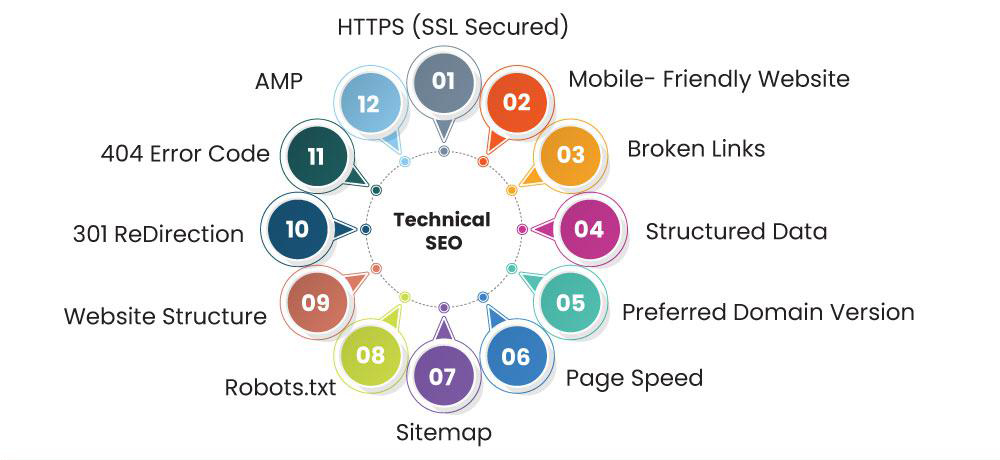
Technical SEO Best Practices
Submit XML sitemaps to search engines
Use canonical tags to avoid duplicate content
Optimize core web vitals
Ensure fast server response time
Conduct regular technical SEO audits
Technical SEO Tools
Several tools make technical SEO easier to manage:
Google Search Console: Track indexing, crawl errors, and performance metrics.
Screaming Frog SEO Spider: Audit your website for broken links, redirects, and duplicate content.
GTmetrix or PageSpeed Insights: Analyze website speed and optimization recommendations.
Ahrefs or SEMrush: Identify technical issues alongside backlink and keyword data.
The Future of Technical SEO
As search engines evolves, technical SEO continue to focus on user experience, performance, and accessibility.
Technical SEO is the backbone of a successful SEO strategy. By ensuring your website is fast, secure, mobile-friendly, and easy to crawl, you create a strong foundation for better rankings and a long-term online success