Table of Contents
ToggleSearch Engine Marketing (SEM): Driving Visibility Through Paid Search
In today’s competitive digital environment, appearing at the top of search engine results is essential for business success. Search Engine Marketing (SEM) helps businesses gain instant visibility by promoting websites through paid search advertising. It is one of the fastest ways to reach potential customers who are actively searching for products or services.

What Is Search Engine Marketing?
Search Engine Marketing (SEM) is a form of digital marketing that involves promoting websites by increasing their visibility in search engine results pages (SERPs) through paid advertisements. These ads typically appear at the top or bottom of search results and are marked as sponsored or ads.
SEM mainly focuses on Pay-Per-Click (PPC) advertising, where advertisers pay only when users click on their ads.
Why Search Engine Marketing Is Important
SEM plays a crucial role in digital marketing because it:
Provides instant visibility on search engines
Reaches users with high purchase intent
Delivers measurable and trackable results
Offers flexible budgeting options
Complements organic SEO efforts
Types of Search Engine Marketing Ads
1. Search Ads: These are text ads that appear on search engine results pages when users search for specific keywords.
2. Display Ads: Visual banner ads that appear on websites within the advertising network.
3. Shopping Ads: Product-based ads that show images, prices, and store information.
4. Video Ads: Ads that appear on video platforms like YouTube.
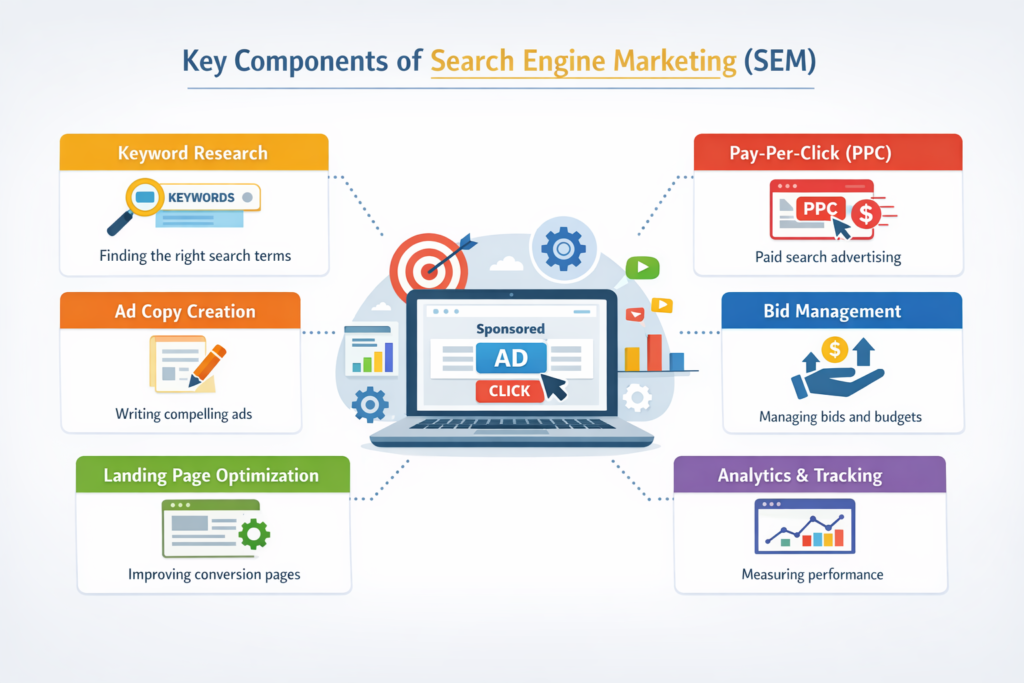
Key Components Of Search Engine Marketing
1.Keyword Research
Keyword research is the foundation of SEM. Marketers select relevant keywords that users search for when looking for products or services. Choosing the right keywords ensures ads appear to the right audience
2. Pay-Per-Click (PPC) Advertising
PPC is the most common SEM model. Advertisers bid on keywords and pay only when users click on their ads. Google Ads is the most widely used SEM platform.
3. Ad Copy Creation
Effective ad copy attracts users and encourages them to click. Clear headlines, compelling descriptions, and strong call-to-action phrases improve ad performance.
4. Landing Page Optimization
A well-designed landing page increases conversions. The page should be relevant to the ad, easy to navigate, and focused on user action.
5. Bid Management
Bid management helps control advertising costs and competitiveness. Advertisers can adjust bids based on performance, competition, and campaign goals.
6. Performance Tracking and Analytics
SEM allows businesses to track clicks, impressions, conversions, and return on investment (ROI). These insights help optimize campaigns for better results.
Advantages of Search Engine Marketing
1. Immediate Results:
Unlike SEO, SEM can generate traffic almost instantly after launching a campaign.
2. Highly Targeted Advertising:
Advertisers can target audiences based on keywords, location, device type, language, and demographics.
3. Measurable Performance:
SEM campaigns provide detailed analytics such as clicks, impressions, conversions, and return on investment (ROI).
4. Budget Control:
Businesses can set daily or monthly budgets and adjust them based on campaign performance.
5. Increased Brand Awareness:
Even if users do not click the ad, seeing the brand name repeatedly increases brand recognition.
Challenges of Search Engine Marketing
Can be expensive in competitive industries
Requires ongoing monitoring and optimization
Results stop when ads are paused
Needs expertise to manage effectively
SEM vs SEO
SEM and SEO are often confused, but they are different strategies.
| SEM | SEO |
|---|---|
| Paid strategy | Organic strategy |
| Instant results | Takes time |
| Uses paid ads | Uses optimization techniques |
| Traffic stops when ads stop | Long-term traffic |
Search Engine Marketing is a powerful digital strategy that helps businesses reach customers at the right time with the right message. When managed effectively, SEM drives traffic, generates leads, and delivers strong returns on investment in a competitive online market.