Table of Contents
Toggle12 Proven On-Page SEO Strategies for Amazing Google Rankings
On-Page SEO is an important part of Search Engine Optimization that helps improve a website’s visibility in search engines like Google. It involves optimizing different elements of a webpage such as titles, headings, keywords, images, and internal links. When these elements are properly optimized, search engines can better understand the content and rank the website higher in search results.On-Page SEO is a powerful technique that helps websites achieve better rankings in search engines like Google.
What Is On-Page SEO?
On-page SEO is the process of optimizing the content and structure of a webpage so that search engines can easily understand it. It focuses on improving elements such as titles, headings, keywords, images, and internal links. When these elements are optimized properly, search engines can index the page more effectively and show it to users who are searching for related information.
Unlike off-page SEO, which focuses on backlinks and external signals, on-page SEO is completely within the control of the website owner.
Why On - Page SEO Is Important
On – page SEO is essential because it:
Helps search engines understand your content
Improves websites usability and readability
Increase organic traffic
Boosts search engine rankings
Enhance user engagement and conversions
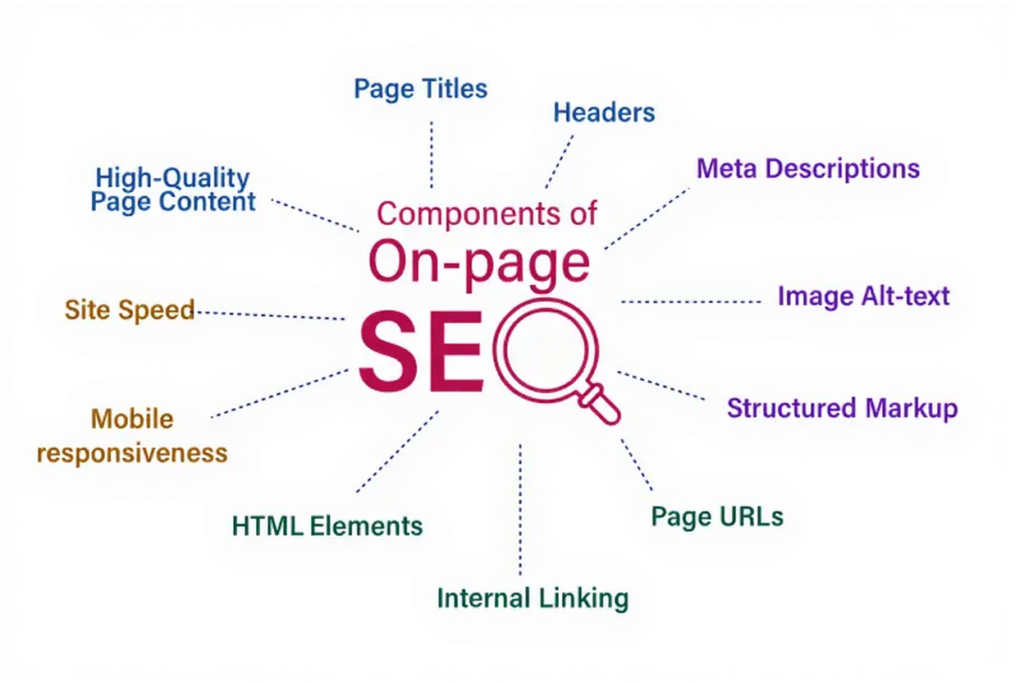
12 Essential On Page SEO Strategies
1. Use Your Focus Keyword Strategically
Your focus keyword, such as on page SEO, should appear naturally in key areas like the title, introduction, headings, and throughout the content. Avoid overusing it, as keyword stuffing can harm your rankings.
2. Write High-Quality Content
Content is the backbone of on page SEO. Make sure your content is:
Informative
Easy to read
Relevant to user intent
High-quality content keeps visitors engaged and improves ranking signals.
3. Optimize Your Title Tag
Your title is the first thing users see on search results. Keep it:
Under 60 characters
Clear and engaging
Keyword-rich
A strong title improves your click-through rate.
4. Create Compelling Meta Descriptions
A well-written meta description encourages users to click on your link. Include your keyword and keep it within 150–160 characters.
5. Use Proper Heading Structure
Organize your content using headings:
H1 for the title
H2 for main sections
H3 for sub-sections
This improves readability and SEO.
6. Optimize URL Structure
Keep your URLs short, clean, and keyword-focused.
7. Improve Internal Linking
Link to other relevant pages on your website. This:
Helps search engines crawl your site
Keeps users engaged longer
Distributes link authority
8. Optimize Images Properly
Images enhance user experience but must be optimized:
Use descriptive file names
Add ALT text with keywords
Compress images for faster loading
9. Focus on Page Speed
A slow website can hurt both user experience and rankings. Improve speed by:
Optimizing images
Minimizing code
Using fast hosting
10. Ensure Mobile Friendliness
Most users browse on mobile devices. A responsive design ensures your site works smoothly on all screen sizes.
11. Add External Links
Linking to high-authority websites improves credibility and helps search engines trust your content.
12. Match Search Intent
Always create content based on what users are searching for. Understand their needs and provide clear, helpful answers.
On-Page SEO Best Practises
Write for users, not just search engines
Avoid keyword stuffing
Keep content updated
Improve page loading speed
Use clear calls-to-action
Avoid These Common Mistakes
Even small mistakes can affect your SEO performance. Avoid:
Overusing keywords unnaturally
Ignoring meta tags
Publishing low-quality content
Using complicated page layouts
Keeping things simple and user-focused always works best.
On-Page SEO is the foundation of a successful SEO strategy. By optimizing content, structure, and user experience, businesses can improve search rankings and attract the right audience organically. Consistent on-page optimization leads to sustainable online growth.