Table of Contents
ToggleAdvantages and Disadvantages of Social Media Marketing
SMM advantages and disadvantages play a crucial role in shaping modern business strategies. Social Media Marketing (SMM) allows businesses to connect with millions of users across platforms like Facebook, Instagram, LinkedIn, and Twitter. While it offers numerous benefits such as increased brand awareness, cost-effective promotion, and improved customer engagement, it also presents challenges like high competition and time-consuming management. Understanding both sides is essential for leveraging SMM effectively.
Advantages of Scoial Media Marketing
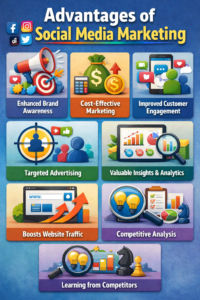
Advantages of Social Media Marketing includes:
1. Enhanced Brand Awareness
One of the most significant advantages of SMM is the ability to reach a vast audience. Social media platforms have millions of active users daily, providing businesses with a chance to showcase their brand to potential customers worldwide. Frequent posting, sharing informative content, and engaging with followers helps in building brand recognition and credibility.
2. Cost-Effective Marketing
Compared to traditional marketing methods, social media marketing is remarkably cost-effective. While paid advertising options exist, creating organic content, engaging posts, or running small ad campaigns requires minimal investment. For startups and small businesses, this makes SMM an accessible way to compete with larger companies.
3. Improved Customer Engagement
Social media allows two-way communication between brands and consumers. Unlike traditional advertising, where communication is one-directional, SMM enables real-time interactions. Businesses can respond to queries, handle complaints, or thank customers, which fosters trust and strengthens relationships.
4. Targeted Advertising
Most social media platforms offer advanced targeting options. Businesses can run ads that reach specific demographics, locations, interests, or behaviors. This precision reduces wastage of marketing resources and increases the likelihood of reaching potential customers who are more likely to convert.
5. Valuable Insights and Analytics
SMM tools provide detailed analytics, allowing marketers to track engagement, reach, clicks, and conversions. These insights help businesses understand their audience better, refine their marketing strategies, and measure the ROI of campaigns effectively.
6. Boosts Website Traffic
By sharing engaging content with links to websites, blogs, or landing pages, social media can drive substantial traffic. Increased traffic can improve search engine rankings, generate leads, and ultimately boost sales.
7. Helps in Competitive Analysis
Monitoring competitors’ social media activities allows businesses to learn what strategies work and what doesn’t. Analyzing competitor content, campaigns, and customer interactions provides valuable information for improving one’s own marketing efforts.
Disadvantages of Social Media Marketing
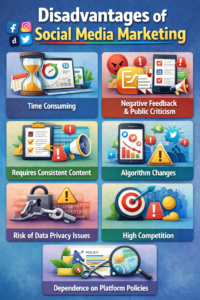
Disadvantages of Social Media Marketing includes:
1.Time Consuming
Managing multiple social media platforms requires consistent content creation, posting, and engagement, which can be time-intensive.
2.Negative Feedback & Public Criticism
Social media is an open platform where negative comments or reviews can spread quickly and harm brand reputation if not handled properly.
3.Requires Consistent Content
Brands must continuously produce creative and engaging content to remain visible, which can be challenging. Z
4.Algorithm Changes
Frequent changes in social media algorithms can reduce organic reach, making it difficult for businesses to maintain visibility.
5.Risk of Data Privacy Issues
Handing customer data on social media platforms can rise privacy and security issues.
6.High Competition
With many brands competing for attention, standing out on social media platforms can be difficult without a strong strategy.
7.Dependence on Platform policies
Businesses depend heavily on platforms rules and policies, which can change without notice and affect marketing performance.
Social Media Marketing is a powerful tool for businesses to build brand awareness, engage with audiences, and boost sales. Its cost-effectiveness, targeting capabilities, and ability to provide real-time insights make it an essential component of modern marketing strategies. However, SMM also comes with challenges like time consumption, negative feedback, and high competition, which require careful planning and execution.
Ultimately, the success of SMM depends on understanding both its advantages and disadvantages. Businesses that strategize wisely, remain consistent, and adapt to changing trends are most likely to reap the rewards of social media while minimizing its risks.