
Table of Contents
ToggleEmail Marketing: Building Strong Customer Relationships Through Email
Email marketing remains one of the most effective digital marketing strategies for businesses of all sizes. Despite the rise of social media and instant messaging platforms, email continues to deliver high engagement, strong returns on investment, and direct communication with customers.
What Is Email Marketing?
Email marketing is the process of sending targeted messages to a group of people through email to promote products, services, or brand awareness. These emails can include newsletters, promotional offers, product updates, and personalized messages designed to engage and convert subscribers.
Evolution of Email Marketing
Email marketing has evolved significantly over the years. In the early days of the internet, businesses sent mass emails without much personalization. Today, modern email marketing focuses on personalization, automation, and customer segmentation. With the help of advanced marketing tools, businesses can now send targeted emails based on customer interests, behavior, and preferences.
Why Email Marketing Is Important
Email marketing is important because it:
Provides direct communication with customers
Delivers high return on investment (ROI)
Builds long-term customer relationships
Allows personalized and targeted messaging
Supports lead nurturing and customer retention
Types of Email Marketing
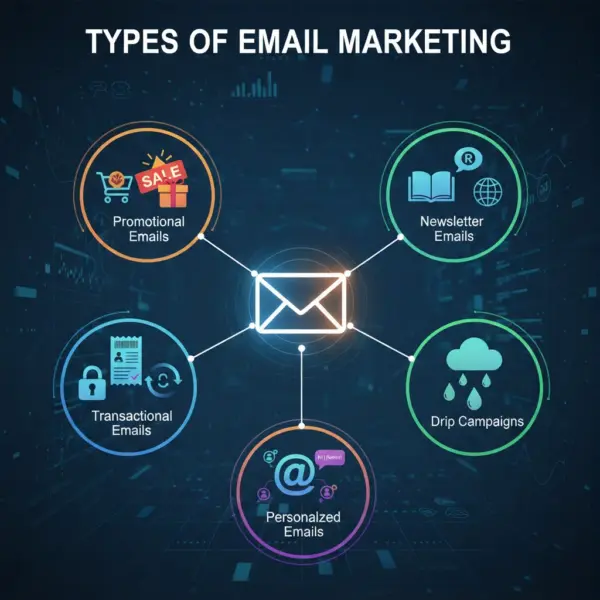
1. Promotional Emails
Promotional emails are used to advertise products, services, discounts, or special offers. They encourage immediate action from subscribers.
2. Newsletter Emails
Newsletters keep subscribers informed about company updates, blog posts, and industry news, helping maintain regular engagement.
3. Transactional Emails
These emails are triggered by user actions such as order confirmations, password resets, or account updates. They provide essential information and enhance user experience.
4.Drip Campaigns
Drip campaigns are automated emails sent over time to guide leads through the customer journey and build trust gradually.
5.Personalized Emails
Personalized emails use customer data like name, preferences, or past behavior to deliver relevant content and improve engagement rates.
Key Components of Email Marketing
1.Email List Building
Building a quality email list is essential. Businesses should focus on collecting subscribers ethically through sign-up forms and lead magnets.
2.Compelling Subject Lines
Subject lines determine whether an email is opened. Clear, engaging, and relevant subject lines increase open rates.
3.Email Content & Design
Well-structured content with attractive design ensures readability and encourages users to take action.
4.Call To Action (CTA)
Strong CTAs guide readers toward desired actions such as visiting a website, making a purchase, or signing up for a service.
5.Analytics & Optimization
Tracking open rates, click-through rates, and conversions helps marketers refine email campaigns for better performance.
Advantages of Email Marketing
Cost-effective and scalable
Highly measurable results
Direct and personalized communication
Supports automation and segmentation
Improves customer loyalty
High return on investment (ROI)
Challenges of Email Marketing
Although email marketing has many advantages, it also has some challenges. One common issue is email overload, where users receive too many emails and may ignore marketing messages. Another challenge is spam filters, which can prevent emails from reaching the recipient’s inbox.
To overcome these challenges, marketers should focus on sending relevant and high-quality content. They should also avoid sending emails too frequently and ensure that subscribers have given permission to receive emails.
Best Practices for Email Marketing
To achieve better results, marketers should follow certain best practices. Building a quality email list is essential. Businesses should collect emails through website sign-ups, newsletters, or lead magnets rather than purchasing email lists.
It is also important to send emails consistently but not excessively, as too many emails may annoy subscribers. Marketers should also test different subject lines, designs, and content to understand what works best for their audience.
Finally, emails should always provide value to the reader, whether through useful information, helpful tips, or exclusive offers.
Email marketing is a powerful and reliable digital marketing strategy that helps businesses connect directly with their audience. When executed with the right strategy and content, it builds trust, drives conversions, and delivers long-term business growth.